
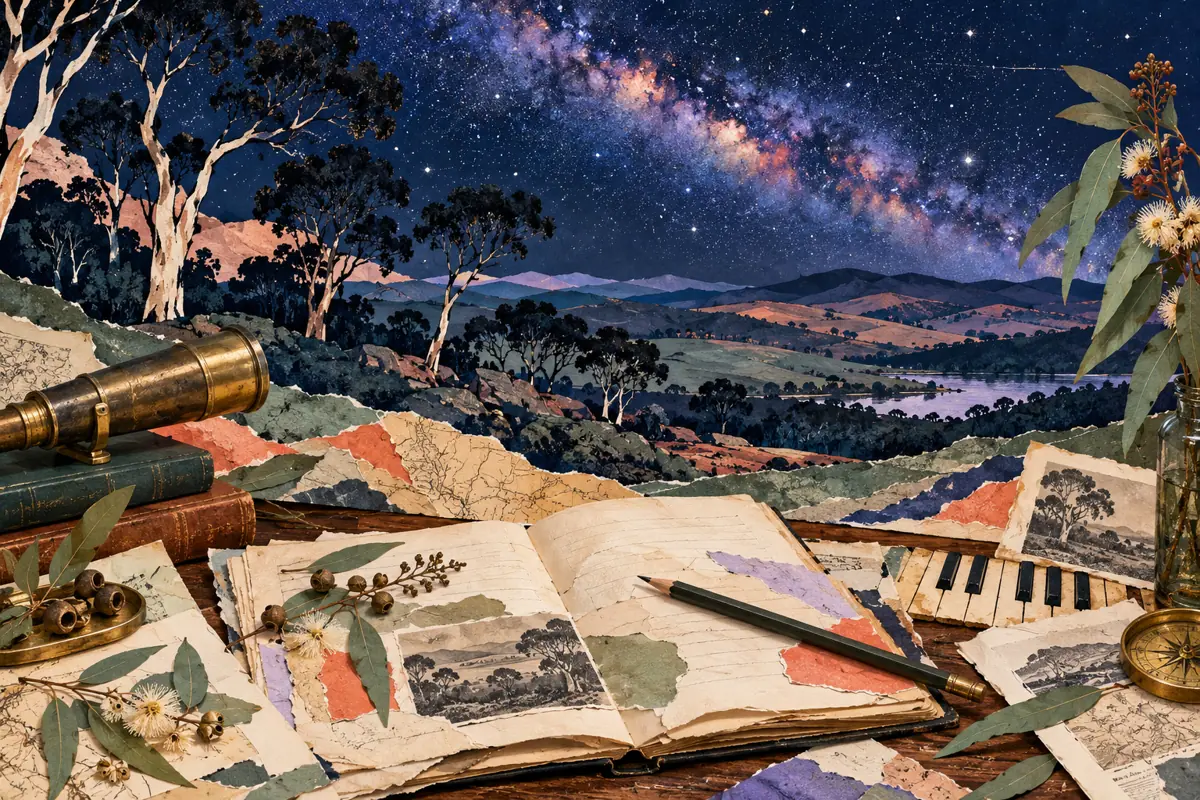
What has always fascinated me is the research authors do to bring their stories to life in a particular place and time. A friend of mine, a romance writer, travels with her wonderful husband to amazing places so she can walk the streets, drink at cafes, or sail in their harbour.
Now, I do not have the freedom to travel far from home. I wondered whether that would be a problem, and the answer was, of course, a resounding “No.”
Writing Control Yourself from lived experience
In Control Yourself, it was easy. I had been to the memorial service, stood on the ground, sat in the armchairs, made guacamole in that kitchen, and knew the view from almost anywhere in that house or garden. I knew, or had known at some point in my life, all the characters.
I had driven those roads, watched the scrub turkeys strut past open doors, played with the ginger cat, and even showered many times in that bathroom. I knew the time, the place, and the people well enough to move them around as much as I liked, in time and space. I didn’t need to research small details; I had lived them or listened to their stories of survival.
Researching the historical world of Dry Land
However, when I began writing Dry Land, I knew I was in completely different territory, though I didn’t realise at first just how different. My curiosity about time, place, people and ideas, language, music, history and culture has driven me to research the most amazing things, such as the first pianos to arrive in Australia and who made them, or what to do when nails are scarce.
Dry Land has a bibliography, but I didn’t use footnotes. That was a step too far.
Checking the Moon on New Year’s Eve 1852
I want to share just one tiny moment, though. I was writing about New Year’s Eve 1852 and wondered what the Moon looked like that night. I had written most of the scene and chosen a Moon that let the Milky Way shine in all its glory.
Then, at the last minute, I had this awful thought. What if the Moon was full that night? I checked it out, and my guess, my desire, my hope, and my intuition were spot on. Can you imagine how exciting it is to find out the Moon’s phase for a date way back in history?
Travelling through stories without leaving home
I’ve had so many moments like that as I drove in my imagination along roads I know well, but this time I noticed different details, and each one felt more exciting than the last. There were times when I just whooped with delight.
At the end of the day, though, in reality, I had not actually left home. That is what reading has always done for me: it takes me far away. I can share that this is what happens to the author too.
So, hang on tightly. I will invite you to travel with me on adventures through time and place, among people I hope you will greet and treat as friends.
More from Joy’s writing desk
For another glimpse of the real-life moments that find their way into my fiction, read Never Too Late. You can also explore my books and current writing projects.
Curious about researching a night sky yourself? Time and Date’s Moon phase calendar lets readers explore lunar calendars by year and location. This is a resource for further reading, rather than a record of the source I used for Dry Land.


